
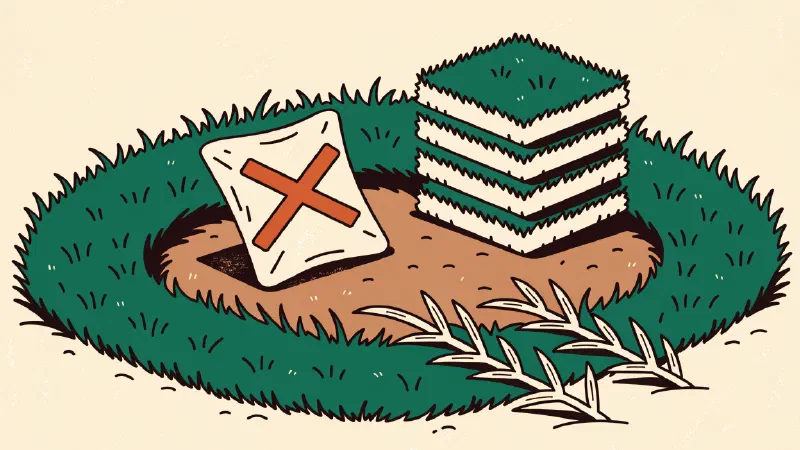
Bare Patches: Returfing vs Seeding (and Why Buffalo Can't Be Seeded)
A patchy lawn usually sends people looking for a bag of grass seed, and searching how to fix patchy grass turns up seed as the obvious answer more often than not. For a lot of South East Queensland lawns, that’s not actually a workable fix, and it’s worth knowing why before you spend money on seed that was never going to take.
Why buffalo grass can’t be grown from seed
The buffalo varieties sold as turf across Australia, including the common types planted through Queensland, are effectively sterile: they produce very little seed, and what seed heads they do form aren’t viable for growing a new lawn from. This isn’t a case of seed being available but slow or unreliable, turf farms themselves can’t grow these buffalo varieties from seed either. They’re established and multiplied entirely from live vegetative material: runners, plugs, or strips of established turf. If buffalo is what’s growing in the rest of your lawn, a bag of seed for that patch simply isn’t an option, whatever the label promises.
What actually works for a buffalo lawn
For a bare patch in an established buffalo lawn, the practical options are runners taken from a healthy part of the same lawn, or a patch of matching turf laid straight over the bare area. Both rely on live plant material spreading in or knitting into place, not on seed germinating.
Couch and other grasses are a bit different
Couch and some other warm season grasses do have viable seed available, but even where seed is technically an option, matching an existing lawn from seed is fiddly: germination takes time, the patch is vulnerable to weeds and washout while it establishes, and getting a good colour and density match to an older, established lawn from a fresh seed patch is genuinely difficult. Turf or runners from the same grass type generally get you a matching result faster and with less risk of the patch failing before it establishes.
Preparing the ground either way
Neither runners nor fresh turf do well laid straight onto whatever soil is already there. The bare patch needs loosening, any old dead grass and debris raked out, and the level checked against the surrounding lawn before anything new goes down, since a patch sitting proud or sunken relative to the rest of the lawn is one of the more obvious signs of a rushed repair. A thin layer of quality topsoil or a turf underlay levels out minor dips and gives new runners or turf something better to root into than compacted bare earth.
Choosing between returfing and using runners
A small patch in an otherwise healthy lawn is often quickest fixed with runners taken from elsewhere in the same lawn, since they’re already the exact grass you’ve got. A larger bare area, or one where the surrounding grass isn’t healthy enough to spare runners from, usually calls for a fresh piece of matching turf instead, laid onto properly prepared, levelled soil.
Keeping a repaired patch alive
Whichever method you use, the first few weeks are the ones that matter most. Runners and fresh turf both need more frequent, lighter watering than an established lawn while their roots are still shallow, and keeping foot traffic off the patch during that period gives it a fair chance to knit in properly rather than getting pulled apart before it’s taken hold.
The short version
If your lawn is buffalo, seed isn’t a real fix for a patchy lawn at all, use runners or matching turf instead. For other grass types, seed exists but usually isn’t the faster or more reliable choice compared to turf or runners taken from your own lawn.
Stump Boss does stump grinding and lawn aeration from North Brisbane to the Sunshine Coast. If you need a stump ground out or the lawn cored, send a few photos and get a quote.
Related reading: zoysia, buffalo or couch: matching grass when you patch a lawn Service page: services
Stump Boss does stump grinding and lawn aeration from North Brisbane to the Sunshine Coast.