
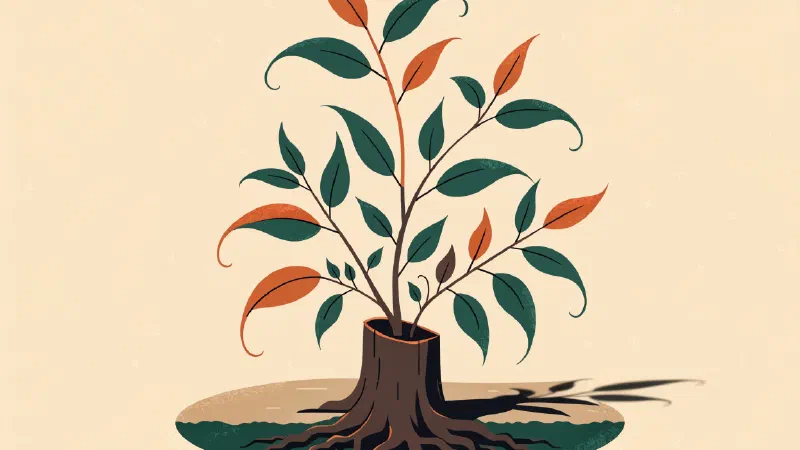
Camphor laurel stumps in South East Queensland
Camphor laurel (Cinnamomum camphora) is one of the more recognisable large trees in older South East Queensland yards, but it comes with a legal status and a regrowth problem that a lot of property owners aren’t aware of until they’ve dealt with one.
Its legal status in Queensland
According to Business Queensland, camphor laurel is classified as a category 3 restricted invasive plant under the Biosecurity Act 2014. That status carries a general biosecurity obligation: anyone with camphor laurel on their land is required to take all reasonable and practical measures to minimise the biosecurity risks it poses. It’s also illegal to give away, sell, or release camphor laurel into the environment, with penalties attached. None of this stops a landholder from removing a tree already on their property, but it does explain why it’s treated so seriously as a species.
Why it’s such a problem tree
The reasons camphor laurel earned that classification are practical ones. Business Queensland notes that it aggressively displaces native vegetation, including food sources important to koalas, and develops a root system large enough to block drains and crack concrete structures. It also produces over 100,000 seeds a year, spread effectively by birds and water, which is a big part of why it keeps turning up on properties where nobody planted it deliberately.
Why the stump keeps coming back
This is the part that catches people out after a tree comes down. Business Queensland is direct about it: failure to remove the roots or crown of a mature camphor laurel will result in regrowth. Fire only kills the parts above ground and can actually trigger new growth from the base, so burning or simply cutting the trunk back doesn’t solve the underlying problem. For larger specimens, the guidance points to herbicide injection as the more practical control method for trees over about 6 metres tall, precisely because cutting alone leaves enough live root and crown tissue behind for the tree to start again.
Why South East Queensland specifically
Business Queensland notes that camphor laurel is currently having its greatest impact in south-eastern Queensland, where it’s ranked among the region’s most invasive plants. That’s a reflection of how well the climate here suits it: warm, humid conditions and reliable rainfall are exactly what let a camphor laurel establish quickly from a single bird-dropped seed and grow into a large, deeply rooted tree within a relatively short number of years, which is part of why so many older South East Queensland properties have at least one on the block, planted deliberately decades ago or simply grown from a stray seed since.
What this means if you’ve got one on the block
If a camphor laurel has already come down, or you’re planning to have one removed, the stump left behind is the part that determines whether the problem is actually solved. A trunk cut flush with the ground still has a live root crown underneath capable of sending up new shoots. Grinding the stump out below ground level removes that growing point along with it, which is the difference between a job that’s finished and one that needs revisiting in a year or two once new growth appears around the base.
Palm stumps behave almost the opposite way; see palm stumps: why they grind differently for a tree that, unlike camphor laurel, doesn’t resprout once it’s ground out.
Stump Boss handles stump grinding and lawn aeration from North Brisbane to the Sunshine Coast, big, small and hard to reach. If you’ve got a camphor laurel stump that needs to actually stay gone, send a few photos and get a quote for stump grinding.
Stump Boss does stump grinding and lawn aeration from North Brisbane to the Sunshine Coast.