
Dog Damage on Buffalo and Couch Lawns: How to Fix It
If you’ve got a dog and a lawn, you’ve probably got a few round brown patches to go with it. The good news is that buffalo, couch and the other self repairing grasses common across South East Queensland are generally well suited to bouncing back from this on their own, with a bit of help.
Why the damage happens
Dogs are carnivores, and a high protein diet means a lot of nitrogen comes out in their urine. Grass actually needs nitrogen, that’s a core part of what fertiliser is, but a concentrated dose in one spot from repeated urination is simply too much in too small an area, and the result is a scorched, dead looking patch rather than a green one.
Why buffalo and couch usually recover
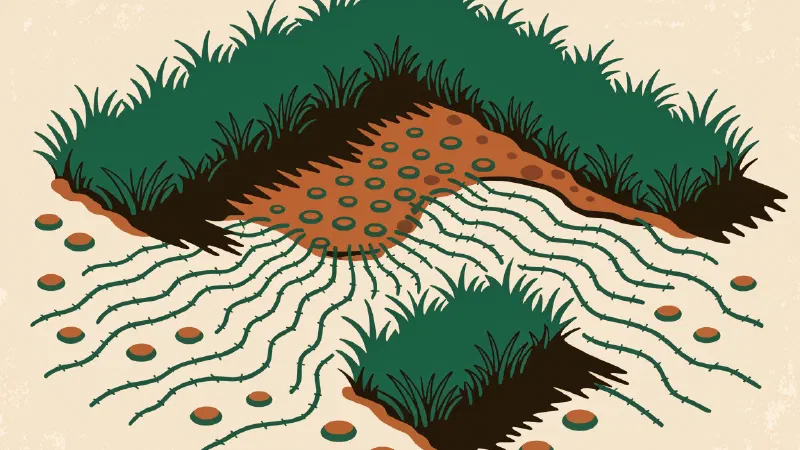
Grasses that spread through rhizomes or stolons, which includes buffalo, couch and kikuyu, have a genuine advantage here: they can regenerate into a damaged patch by spreading in from the surrounding healthy grass, rather than needing to be reseeded or reestablished from scratch. Soft leaf buffalo in particular holds up well to the kind of repeated traffic a family dog brings.
Fixing existing brown patches
The basic fix for a patch that’s already scorched is straightforward: rake out the dead grass so new growth isn’t fighting through dead thatch, then water the area regularly. Regular watering does two things at once, it helps flush the excess nitrogen out of the soil, and it gives the surrounding grass the moisture it needs to spread back in across the bare patch. For a lawn on the region’s clay soils, that watering also helps stop the nitrogen sitting concentrated right at the surface.
Why concentration is the real issue, not the nitrogen itself
It’s worth being clear that nitrogen isn’t the enemy here. It’s one of the main nutrients in ordinary lawn fertiliser, and grass needs it to grow well. The problem with dog urine is purely about how much lands in one small spot at once, which is a completely different situation to nitrogen spread evenly across the whole lawn by a normal feed. That’s also why a lawn that’s otherwise healthy and well fed tends to recover from urine damage faster than a lawn that’s already under stress from poor soil or insufficient watering.
Reducing how often it happens
A few small habits make a real difference to how much new damage shows up. Training a dog to use the same general area, rather than the whole yard, means any ongoing damage stays confined to one patch you can manage, instead of spreading across the lawn. Watering a spot straight after your dog uses it dilutes the urine before it has a chance to concentrate and burn. Products designed to reduce impurities in a dog’s drinking water are aimed at reducing new burns forming, though they won’t do anything for patches that are already there, that part still comes down to raking and watering.
When it might not be urine at all
Not every brown patch a dog walks past is actually urine damage. Compacted soil from a regular walking track, or fungal patches that happen to sit near where a dog spends time, can look similar at a glance. If patches keep appearing in spots your dog doesn’t actually favour, or the shape and pattern don’t match a typical scorched circle, it’s worth considering other causes before assuming the dog is responsible for all of it.
The short version
Existing patches: rake out the dead grass and water consistently, and let the self repairing grass do the rest. Going forward: manage where your dog tends to go, and water problem spots promptly after use.
Stump Boss does stump grinding and lawn aeration from North Brisbane to the Sunshine Coast. If you need a stump ground out or the lawn cored, send a few photos and get a quote.
Related reading: bare patches: returfing vs seeding Service page: services
Stump Boss does stump grinding and lawn aeration from North Brisbane to the Sunshine Coast.