
Grass dying where the stump was: why it needs more than water
It’s a common pattern after a stump comes out: new grass gets laid or seeded over the spot, it comes up fine for a few weeks, and then it yellows off and dies while the rest of the lawn around it stays healthy. Watering more doesn’t fix it, because water was never really the problem.
Nitrogen is the actual issue
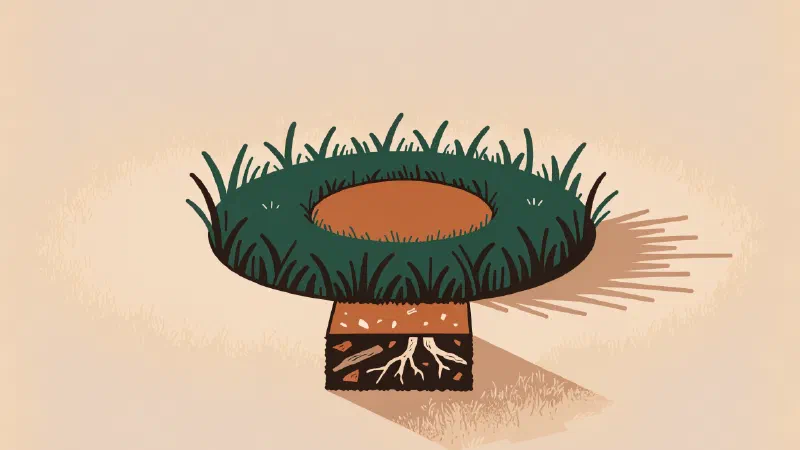
Leftover sawdust and wood chips from the grinding process are high in carbon and very low in nitrogen. As they break down in the soil, the microorganisms doing that decomposing work need nitrogen to fuel the process, and they pull it straight out of the surrounding soil to get it. Grass has a shallow root system compared to a tree, so it’s competing directly with those microbes for whatever nitrogen is available, and it usually loses. The result is grass that yellows off and dies back, not because it’s thirsty, but because it’s starved of the one nutrient it needs most to stay green.
Why this can drag on for months
This isn’t a quick problem to grow out of, either. The microbial breakdown of wood chips and sawdust is a slow process, and the nitrogen drawdown continues for as long as there’s still undecomposed wood material in the soil. That’s why grass in a stump patch can keep failing attempt after attempt if nobody addresses what’s actually happening underground.
What actually fixes it
There’s a clear sequence that deals with the real cause rather than the symptom:
- Clear out the sawdust and wood chips. Removing as much of the carbon-rich material as possible stops it competing with the grass for nitrogen in the first place.
- Bring in quality topsoil. Filling the area with decent lawn soil rather than leaving the old grindings in place gives new grass a growing medium that hasn’t already had its nitrogen tied up.
- Apply a nitrogen-heavy fertiliser. A slow-release nitrogen product feeds the area gradually over roughly eight to twelve weeks, which lines up with how long the residual wood material keeps drawing nitrogen down.
- Keep it consistently moist. Once the nitrogen issue is addressed, regular watering actually matters again, since new grass still needs even moisture to establish properly.
A quick way to check if this is actually what’s happening
If a patch of grass near an old stump area is yellowing rather than browning off crisp and dry, and it’s happening despite watering that keeps the rest of the lawn perfectly healthy, that pattern itself is a reasonable sign the issue is nutrient related rather than moisture related. Yellowing from nitrogen deficiency tends to show first in the older, lower leaves of the grass plant before spreading, which is a slightly different pattern to the more uniform browning typical of a lawn that’s simply drying out from underwatering.
Why “just water it more” never works on its own
Extra water can’t put nitrogen back into soil that’s being actively depleted of it. It’s an easy mistake to make because dying grass looks like a watering problem from the surface, but the actual mechanism is happening underground, in a tug of war between microbes and roots for a nutrient that water alone doesn’t supply.
If a tree, rather than turf, is what you’re trying to establish in the same spot, the same nitrogen issue applies with a few extra considerations; see can you plant a tree where a stump was.
Stump Boss does stump grinding and lawn aeration from North Brisbane to the Sunshine Coast. If you would like the lawn cored or a stump ground out, send a few photos and get a quote.
Stump Boss does stump grinding and lawn aeration from North Brisbane to the Sunshine Coast.