
Kikuyu creeping into buffalo: control options
If you’ve got a buffalo lawn in South East Queensland, there’s a good chance kikuyu will find its way in eventually. It’s one of the most common lawn problems in the region, and it’s also one of the harder ones to deal with once it’s established.
Why buffalo hides the problem
Buffalo’s broad leaf and thicker thatch layer actually work against you here. According to myhomeTURF, that dense growth habit hides new kikuyu seedlings extremely well while they’re young, letting kikuyu get a foothold and build a solid root system before anyone notices it’s there. By the time the coarser, faster-growing kikuyu blades are obviously visible against the buffalo, it’s often already well established underneath.
Why there’s no easy spray-and-forget fix
This is the part that catches people out. My Lawn Book’s guidance is blunt about it: there’s no selective herbicide that will kill kikuyu while leaving buffalo, fescue or rye untouched, because kikuyu and these other lawn grasses are similar enough botanically that a product killing one tends to kill the others too. That rules out the simple option a lot of people expect exists, a spray you put down that only targets the invader.
What actually works
With no selective option available, the realistic choices come down to:
- Glyphosate spot treatment. A non-selective herbicide like glyphosate will kill kikuyu, but it kills whatever green growth it touches, buffalo included. This only makes sense as a targeted approach on a small, contained patch, applied carefully enough to avoid the surrounding healthy lawn, and it leaves a dead patch that needs replanting or re-turfing afterwards.
- Manual removal. For a kikuyu patch caught early, while it’s still small and the runners haven’t spread far, digging it out by hand, chasing the runners as far as you can follow them, is a slower but more targeted option that doesn’t kill anything else in the process.
- Ongoing vigilance. Because kikuyu hides so well in buffalo’s thatch, regularly checking for the tell-tale coarser, lighter green blades, particularly after a run of warm, wet weather when kikuyu grows fastest, is the main way to catch it while manual removal is still realistic.
What to actually look for
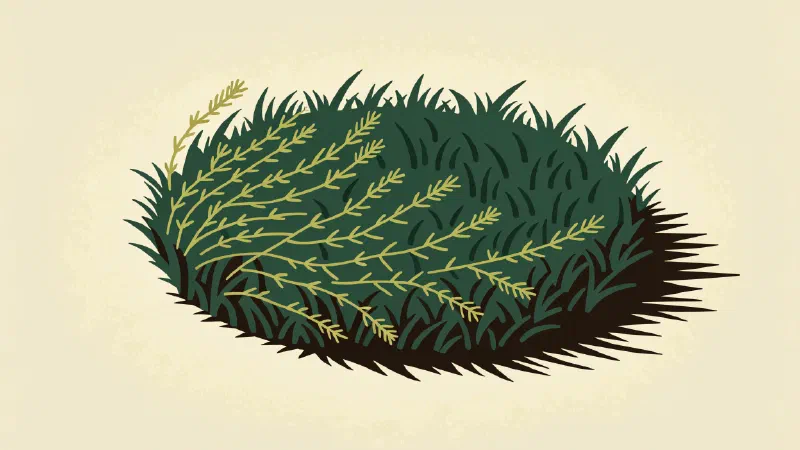
Kikuyu blades tend to be a lighter, brighter green than buffalo and noticeably coarser to the touch, growing along runners that creep across the surface rather than buffalo’s slightly more upright growth habit. Checking along the edges of garden beds, paths and the lawn’s perimeter is worthwhile too, since kikuyu often establishes first along an edge, where it’s had an easier gap to get a foothold, before spreading inward through the rest of the lawn.
Why acting early actually matters here
The consistent message across the guidance is that early detection changes everything. A small patch caught in its first season can be dug out or spot treated with manageable collateral damage. A kikuyu infestation left to spread through an entire lawn usually ends up needing a full glyphosate treatment and a complete re-turf, since there’s no way to selectively remove kikuyu once it’s genuinely mixed through the whole lawn rather than sitting in isolated patches.
If the lawn does end up needing patch repair after treatment, top dressing is often part of getting it to establish evenly again; see top dressing: sand or soil mix for South East Queensland lawns for what that actually involves.
Stump Boss does stump grinding and lawn aeration from North Brisbane to the Sunshine Coast. If you would like the lawn cored or a stump ground out, send a few photos and get a quote.
Stump Boss does stump grinding and lawn aeration from North Brisbane to the Sunshine Coast.