
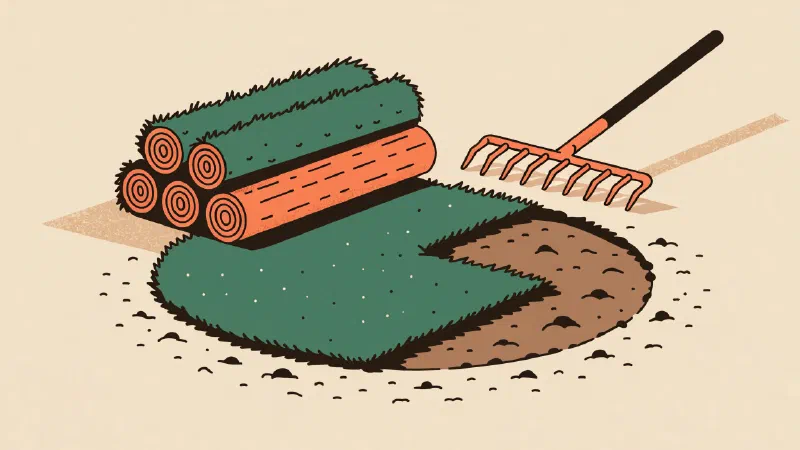
How to Repair Your Lawn After Stump Grinding
Once a stump has been ground out, what’s left behind isn’t a hole exactly, it’s a mound of wood chips sitting over ground that’s going to settle over the following months. Getting a proper lawn back over that patch takes a bit more than just raking it flat and hoping.
Clear the chips first
The chips from grinding aren’t the same as topsoil, and leaving a thick layer of them under new turf or seed is a common reason patches struggle afterwards. As they break down, wood chips draw nitrogen out of the surrounding soil, which is the opposite of what young grass roots want nearby. Clearing out as much of the loose chip fill as you reasonably can, rather than just covering it over, gives whatever you plant a much better start.
Expect the ground to settle
Ground that’s been disturbed by a grinder doesn’t stay level. As the remaining wood and roots break down underneath, the soil above tends to settle and dip over the following weeks and months. It’s normal to need a second, sometimes a third, round of topping up with soil before the level actually holds. Rushing to lay turf on ground that hasn’t finished settling is a common reason for a dip reappearing later.
Getting new grass established
For most South East Queensland lawns, that means buffalo, couch or zoysia, and the practical route to a repaired patch is turf or runners, not seed. Buffalo grass in particular can’t be grown from seed at all: the variety sold as turf produces seed heads that are effectively sterile, which is why even turf farms grow it from live vegetative material rather than seed. Matching whatever grass is already established in the rest of your lawn, rather than mixing in a different variety, keeps the repaired patch from standing out once it’s grown in.
What a normal settling timeline looks like
Don’t expect the ground to be perfectly level within days of the grinding. The chips and disturbed soil keep breaking down and compacting for months afterwards, which is exactly why a single topping up usually isn’t the end of it. Checking back on the patch after a few weeks, and again after a couple of months, and topping up again if a dip has opened up, is a more realistic approach than trying to get it perfect in one pass right after the grinding is done.
Keep it watered while it establishes
New turf or runners over a repaired patch need more frequent watering in the first few weeks than an established lawn does, since the roots haven’t had time to reach any depth yet. Once it’s knitted in and mowing a couple of times without lifting, it can go back onto whatever watering schedule the rest of the lawn is on.
When a garden bed makes more sense than lawn
Not every ground floor stump site is a good candidate for turf, especially if it’s in dappled shade under other trees, or the ground never quite settles flat because of remaining root material underneath. A garden bed or mulched area over the spot sidesteps both problems: it doesn’t need the same level, even surface that turf does, and it can go in on ground that’s still settling without looking patchy the way an uneven lawn would.
Putting it together
Clear the chips, let the ground settle and top up as needed, match the existing grass type rather than guessing, and water it properly while it establishes. Skipping the settling step is the single most common reason a repaired patch looks worse three months later rather than better.
Stump Boss does stump grinding and lawn aeration from North Brisbane to the Sunshine Coast. Send a few photos for a quote on the stump grinding.
Related reading: how deep does stump grinding go, and can you plant there after Service page: services
Stump Boss does stump grinding and lawn aeration from North Brisbane to the Sunshine Coast.