
Can you plant a tree where a stump was
Once a stump has been ground out, a lot of people want to know whether they can simply plant a new tree in the same spot, or whether it’s better to pick somewhere else in the yard entirely. The short answer is yes, you generally can, but the soil needs a bit more attention first than a garden bed that’s never had a tree in it.
The nitrogen problem
The main issue is what’s left behind from the grinding itself. As wood chips and sawdust from the stump start to break down, the microbes doing the breaking down pull nitrogen out of the surrounding soil to fuel that process, which leaves less available for whatever you plant nearby. On top of that, the original tree may have already drawn down nutrients from that patch of soil over years of growth, so a young tree going into the same spot is starting from a soil that’s had a lot taken out of it.
Clearing the ground properly first
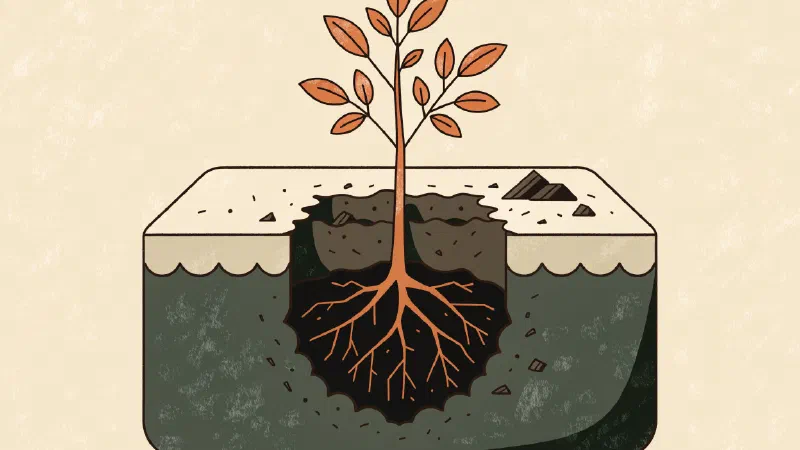
The practical fix is straightforward: remove as much of the leftover sawdust and wood chips as you reasonably can, rather than planting straight into the pile of grindings. Chase out any larger root fragments still sitting in the hole where possible. Then backfill with quality topsoil and compost, which gives the new tree a growing medium that hasn’t just had its nitrogen tied up by decomposing wood.
It also helps to blend in both a quick-release and a slow-release nitrogen fertiliser at planting time, quick release to cover the short-term deficit while the wood chips are still breaking down, slow release to keep feeding the tree as it establishes over the following months.
How long to wait, and how far to move
Recommendations on timing vary, but a common guide is to let the disturbed soil settle for one to two months before planting, since the ground itself needs time to stabilise after the grinding process. If you’re planning to replant the exact same species in the exact same spot, waiting closer to a year or two is often suggested, partly for soil recovery and partly because pests or disease that affected the original tree can still be present in that soil.
An easier option, where the yard allows it, is to plant a little distance away from the old stump rather than directly on top of it, generally at least a metre or two clear. That avoids competing with whatever remains of the old root system underground and gives the new tree room to establish its own roots without running into old, decaying wood a few centimetres down.
Picking a different species can help too
If the original tree failed or had disease issues, planting the exact same species in the exact same spot carries some extra risk, since any pathogen left in the old root system or surrounding soil is more likely to affect a closely related replacement than an unrelated one. Choosing a different species for the new planting, alongside the soil preparation already covered, is a straightforward way to reduce that risk further without needing to move the planting spot at all.
If the grass rather than a tree is the goal
Not everyone wants to plant a new tree in the spot; plenty of people just want the lawn to grow back evenly. That’s a related but slightly different problem; see grass dying where the stump was: why it needs more than water for what changes when it’s turf rather than a tree going back in.
Stump Boss handles stump grinding and lawn aeration from North Brisbane to the Sunshine Coast, big, small and hard to reach. Send a few photos and get a quote for stump grinding if there’s still a stump in the way.
Stump Boss does stump grinding and lawn aeration from North Brisbane to the Sunshine Coast.