
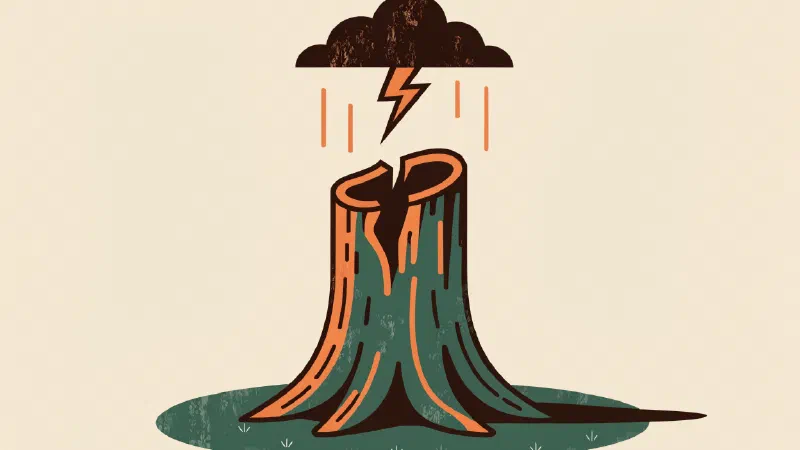
Storm season: getting risky stumps sorted before the wet
Queensland’s cyclone and storm season runs from 1 November to 30 April each year, according to Get Ready Queensland, the state government’s own preparedness campaign. That’s a long window, and most of it lines up with when South East Queensland gets its heaviest rain and its strongest wind events. If there’s a job in the yard you’ve been putting off, this is the season it catches up with you.
RACQ’s storm season checklist focuses on the obvious things: clear your gutters and downpipes, trim back overgrown branches, and remove or secure loose items in the yard that wind could turn into a projectile. None of that is about tree stumps specifically. But it’s worth thinking about what a stump actually is once you look at it through that lens: something sitting in the yard that you can’t move out of the way when the forecast turns bad.
Why an old stump becomes a bigger problem in the wet
A stump on its own isn’t going to blow over. The issue is usually what’s happening around it. Ground that’s already soft from a stump breaking down doesn’t compact the same way as the rest of the lawn, so it holds water differently, and a soggy patch next to a fence line or a shed can turn into a slip or a trip hazard once the rain sets in properly. If the stump is from a tree that came down in an earlier storm, roots can still be part in and part out of the ground, which is exactly the kind of hidden hazard that doesn’t show up until someone’s mower, or foot, finds it.
There’s also the practical side. Once the wet season is properly underway, ground access gets harder. A yard that’s fine to work in during a dry spell in October can be unworkable mud by January. If you’ve got a stump you want gone before summer, getting it done in the drier months ahead of the season is simpler for everyone, including whoever’s doing the grinding.
What to actually check before the season starts
Following RACQ’s own checklist is still the main game: clear gutters, trim back anything overhanging the roof, and walk the yard looking for anything loose that wind could pick up. Add a stump-specific check to that list:
- Is there a stump anywhere near a fence, path or driveway that holds water after rain?
- Is there a stump from a tree that came down in a previous storm, with roots still partly exposed?
- Is there a stump close enough to the house that ground softening around it could affect drainage toward your foundations?
None of these are things the official storm checklists spell out, because they’re written for general yard safety, not stump-specific advice. But the same logic applies: deal with a known hazard while conditions make it easy, rather than waiting until the ground is wet and the job is harder.
Getting ahead of it
If you’ve got a stump that’s been on the list for a while, storm season is as good a prompt as any to finally deal with it. Grinding it out below ground level means there’s nothing left to hold water unevenly, nothing left half exposed, and one less thing to worry about once the rain starts.
For more on what actually happens once a stump is removed, have a read of does insurance cover stump removal after a storm in Queensland, which looks at what one insurer’s own policy wording says about storm damage and stump removal.
Stump Boss handles stump grinding and lawn aeration from North Brisbane to the Sunshine Coast, big, small and hard to reach. If you’d rather have a professional grind it out before the season sets in, send a few photos and get a quote.
Stump Boss does stump grinding and lawn aeration from North Brisbane to the Sunshine Coast.